 SOLD
SOLDCLASS A MOTORHOME

Most people who search sell my motorhome have already tried the private route. A motorhome is the hardest RV to sell privately — it's expensive, it's mechanical, and buyers want to test drive something they can't insure yet. That's why most of them sit for months.
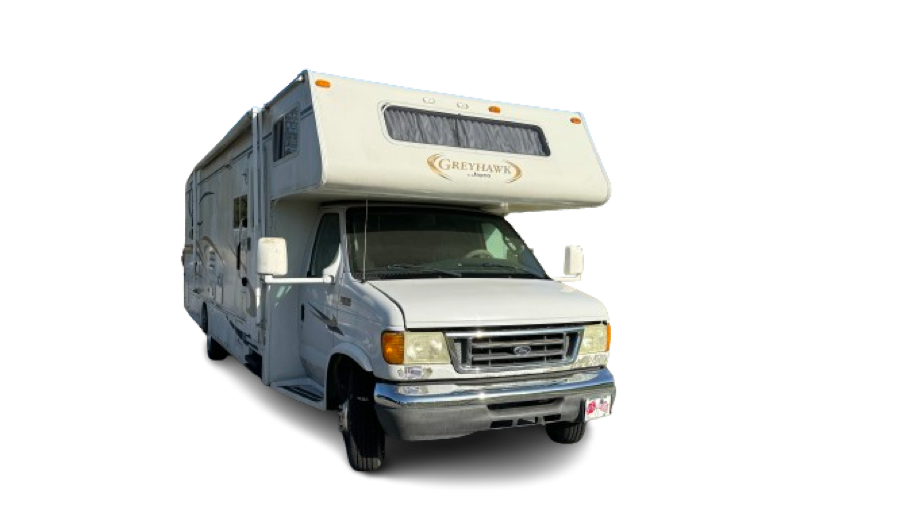
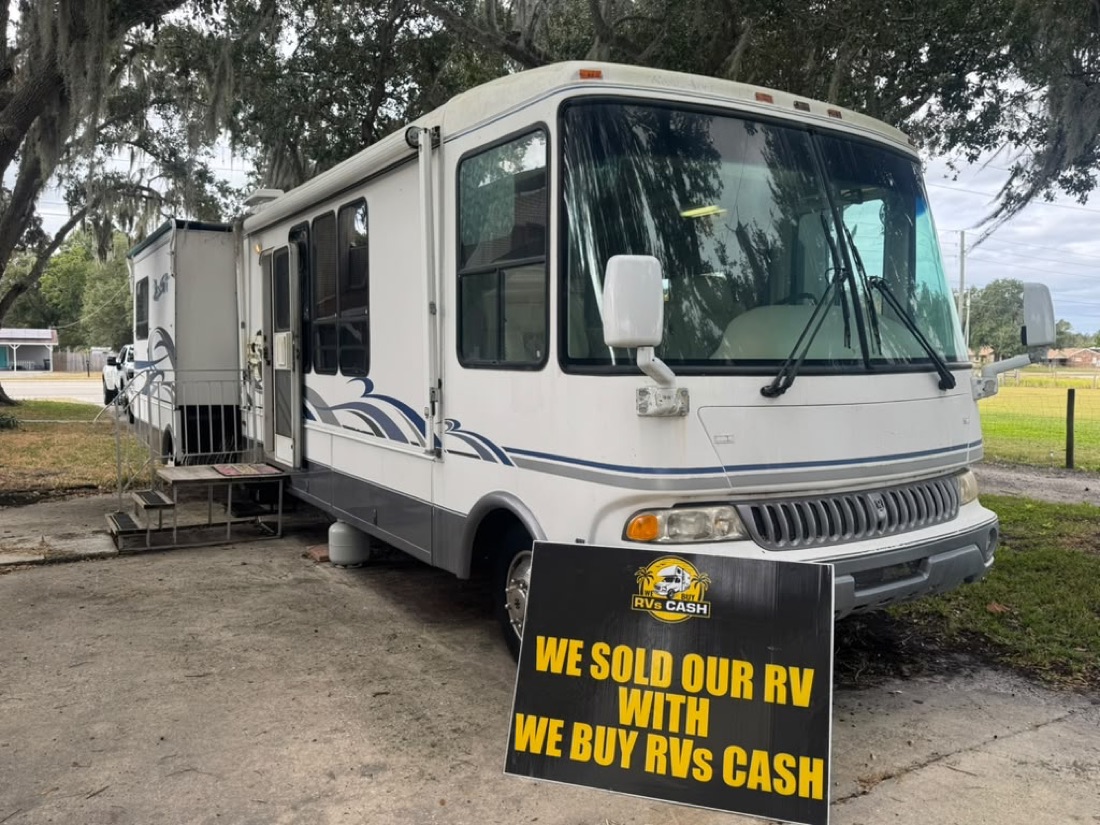
SOLDWe buy Class A, Class B and Class C outright. Diesel pushers, gas coaches, camper vans, cab-overs. Running or not. The drivetrain and chassis carry most of the value, which is why a motorhome that won't start is still worth real money to us and almost nothing to a private buyer.
GET MY OFFER →Not a formula from a book written for a national market. These are the things we actually look at on this type of unit, in Florida.
Unlike towables, mileage genuinely moves the number on a motorhome. Under 60,000 on a gas coach is strong; a diesel can run far past that and still price well.
Faded decals and oxidized gel coat cost far less than owners think. Soft spots in the roof or a past leak cost far more.
A non-running motorhome loses a lot less than you'd expect. We factor the repair, not the panic — and we handle the transport.
Working slides and levelers add real dollars. Stuck ones are a known quantity we price and move on from.
Motorhome owners get the widest spread of offers in this business — a dealer trade, a consignment lot and a cash buyer can be thousands apart on the same coach. Start with an independent range so you can tell which one is insulting you.
OPEN THE ESTIMATOR →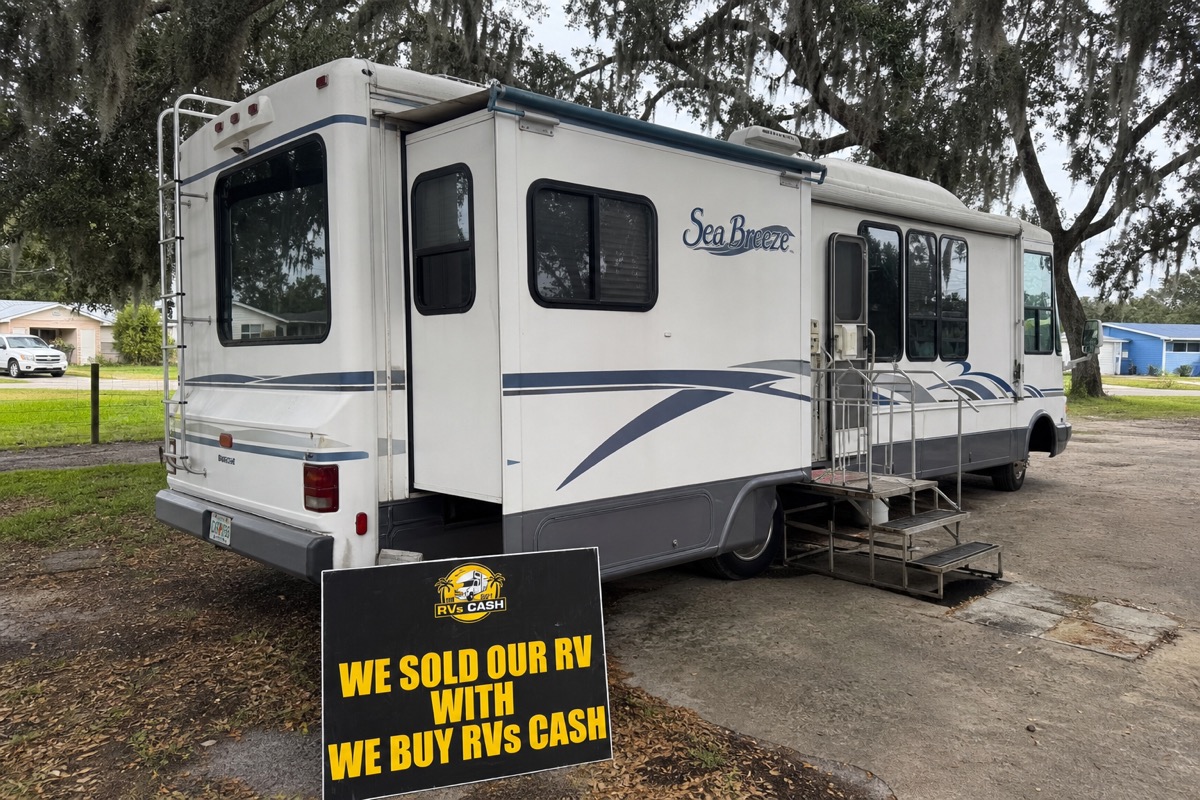
Roof seams, then the slide seals, then whether it starts. Paint and decals come last because they move the number least. A coach that looks tired but has a sound roof beats a shiny one that has been leaking quietly for three summers.
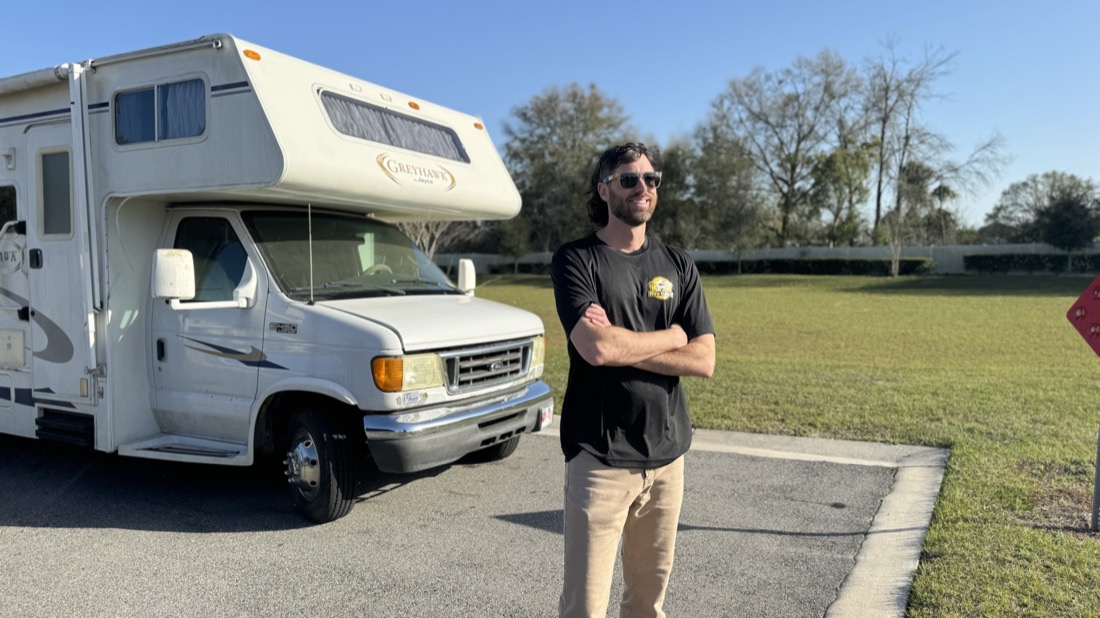
A coach is the most expensive thing we buy and the offer still comes on the spot. There is no manager to run it past, which is why the number does not quietly shrink between the phone call and the handshake.
GET MY OFFER →It depends on class, age, mileage, roof condition and whether it runs. A well-kept Class A from the last decade is usually in the tens of thousands; an older non-running unit still clears four figures. Use the estimator on our homepage for a starting range.
Yes, regularly. Blown engines, dead transmissions, units that haven't started in years. We arrange the transport ourselves — you don't need to get it running to sell it.
All three, plus diesel pushers and camper vans. Class B has been in unusually high demand lately, which shows up in what we pay.
Rarely. A dealer prices your trade against the unit they want to sell you. We're buying outright, so there's no second transaction to protect and no financing to wait on.
Any condition, any year, any make. Running, not running, storm damaged, or sitting since the last decade. Condition changes the number, never the answer.
Yes, non-running motorhomes are a normal purchase for us. The drivetrain, chassis, generator and appliances carry value whether the engine turns over or not, and we bring a rig capable of moving a full-size coach at no charge to you. Tell us where it sits and whether the wheels still roll, since a locked brake changes what equipment we send out.
High mileage lowers value but rarely ruins it, and it matters far less on a diesel chassis than a gas one. A 150,000-mile pusher with service history can outprice a neglected gas coach at half that reading. Long storage with no miles is its own problem, because dry-rotted tires, stale fuel and cracked belts all cost money to correct.
No inspection is needed. We are not asking you to prove condition, and a paid inspection will not raise our figure. Describe what you know, send pictures, and let us do the evaluation. An inspection report only helps if you intend to sell privately to a retail buyer who wants third-party reassurance before wiring a large sum to a stranger.
Yes. Expired registration does not block a sale, because we are buying the vehicle rather than driving it away on your plate. The title is what matters. If the title is lost, Florida allows a duplicate application, and we can walk you through the steps. Lapsed registration is extremely common on coaches that have been parked for several years.
A motorhome is two machines bolted together. There is a chassis with an engine, transmission, brakes and cooling system, and there is a house built on top of it with cabinets, plumbing and a ceiling. A private buyer in Florida has to evaluate both, and almost nobody can do that confidently. Test drives are where listings die. Few people are comfortable taking a 34-foot Class A around a residential block, and fewer will hand over insurance details for the privilege. So the coach sits. It keeps costing money while it sits: storage fees, insurance, a battery bank that goes flat, tires that age out on the sidewall whether the wheels turn or not. Class B vans move faster than Class A and C, but even those stall once the odometer climbs.
The common assumption is that a coach that will not start is worth scrap. That is wrong far more often than it is right. The engine and transmission are the two most expensive components on the unit, and they hold real money even when the living space around them is tired. A no-crank condition is usually batteries, a bad ground or a fuel delivery problem, not a dead block. Diesel pushers keep value especially well, because the powertrain and air suspension have their own market independent of the coach.
Does it crank, does it run, does it shift. Those three answers set the floor. A gas V10 or a Cummins that moves under its own power is worth substantially more than one that has not turned over in four years. Tell us when it last moved, whether it smokes on startup, and whether the transmission slips on an incline. If you do not know, say so. An unknown prices better than a wrong answer.
Mileage moves the number here the way it does on a truck, because the chassis is a truck. Under 60,000 miles on a gas coach reads as low. A diesel pusher at 120,000 is barely broken in and gets priced accordingly. High miles are not automatically bad when the maintenance was done. What concerns us more is a coach with almost no miles, since long storage does its own damage to seals, belts, hoses and rubber.
Onan hours tell us how the coach was actually used. A generator that starts and carries a load adds value on its own, and a dead one is simply a known cost. The same goes for the roof air units, the inverter, the step motor and the house battery bank. Dash air matters more in this state than anywhere else in the country. None of it has to work for us to buy the coach. It has to be described accurately.
On a motorhome, leaks begin where a towable never has one: the windshield gasket, the front cap seam, and the overhead bunk on a Class C. Look for staining on the ceiling above the driver, a soft area in the cabover, or a musty smell around the dash and kick panels. Report what you find. A wet cabover is ordinary on older Class C units and it disqualifies nothing.
Send us year, make, model, engine, mileage and whether it currently drives. Photos of the dash, the engine bay if you can reach it, the front cap and the living area help most. We check auction and wholesale results for that chassis and floorplan, then call you with a figure, usually the same day. If you take it, we set a pickup window. Coaches that will not start get a wrecker or a heavy tow, and that equipment is our expense, not yours. Have the title and your ID ready. We pay before the unit leaves your driveway or your storage lot. When there is a lien, we handle the payoff directly with the lender.
Send the year, make, model and mileage. Coaches get a same-day answer and we come to it if it doesn't run.
CALL NOW (407) 533-8871On the Tampa Bay side? Call (813) 679-9551 instead.
Have the odometer reading and know roughly when it last ran. On a coach those two answers narrow the range faster than anything else you could tell us.