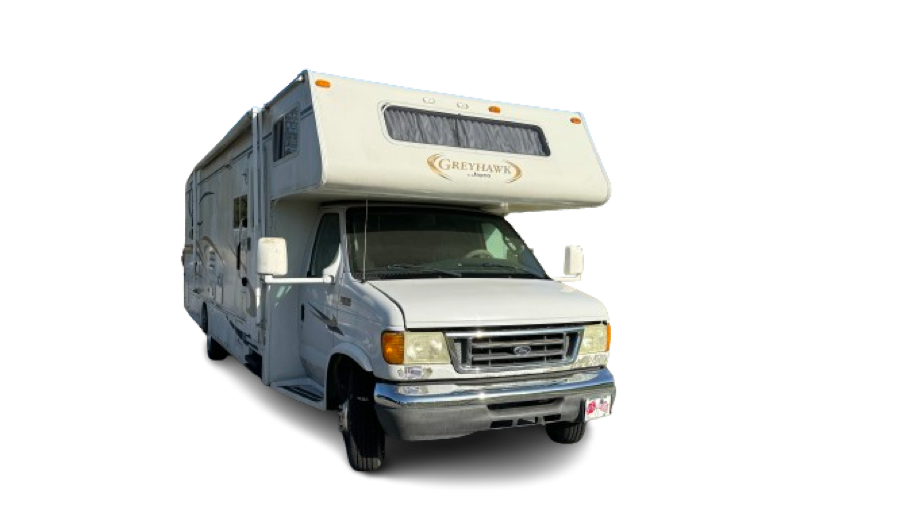
 SOLD
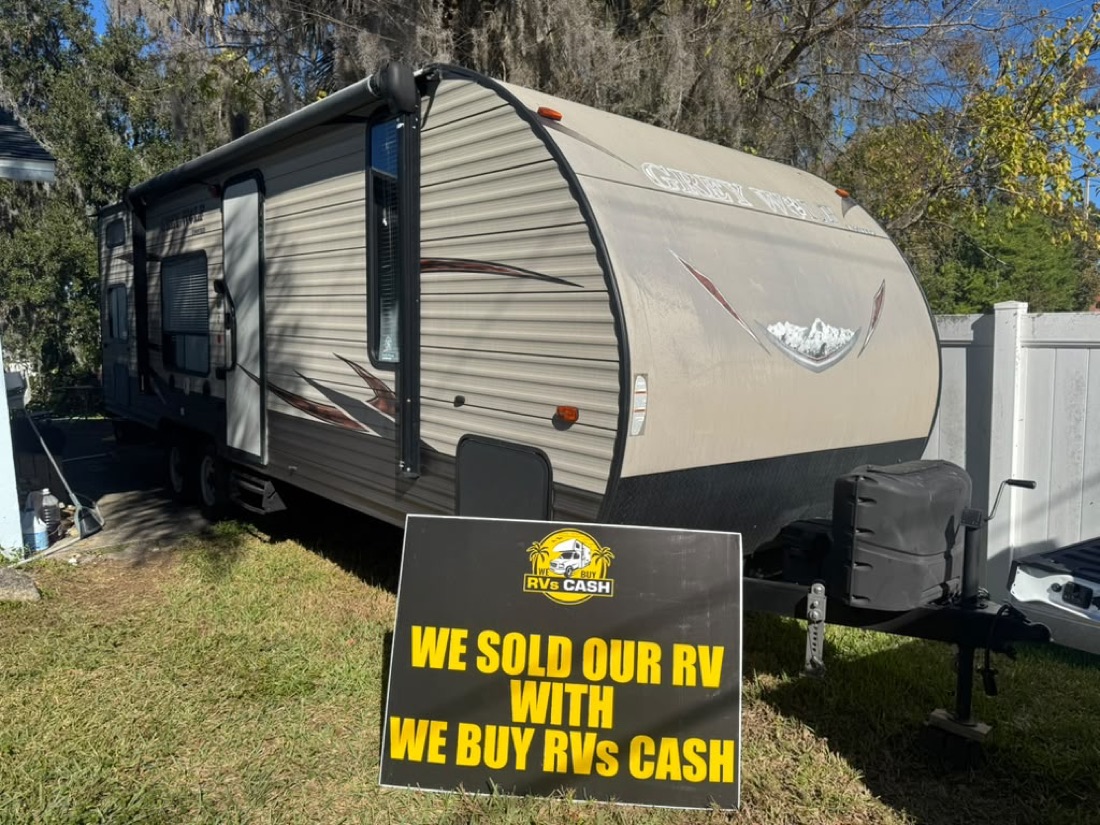
SOLDCHEROKEE GREY WOLF

People search sell my camper long before anyone offers to buy one. Campers are the easiest RV to buy and the most annoying to sell. They're too cheap to interest a dealer, too big to leave in the driveway, and every private buyer wants to haggle over three hundred dollars.
SOLDWe buy pop-ups, truck campers, small travel trailers and teardrops — the whole small end of the market that most buyers won't bother with. You don't need a tow vehicle, you don't need to clean it, and you don't need to meet a stranger in a parking lot to find out they lowball too.
GET MY OFFER →Not a formula from a book written for a national market. These are the things we actually look at on this type of unit, in Florida.
A clean small camper often prices better per foot than a tired big one. We're not paying by the foot, we're paying by what someone will actually want.
On pop-ups the canvas is the thing. Tears, mildew and a stiff lift system are the usual issues and none of them end the deal.
Sold the truck years ago? Most of our camper purchases get towed out by us. That's included, not an add-on.
Soft floors near the door and around the roof vents tell us most of what we need. Be straight about it and the offer stays straight.
Nobody publishes honest values for the small end of the market, which is exactly why campers get lowballed. Four details and you'll know roughly where yours sits before anybody makes you an offer.
OPEN THE ESTIMATOR →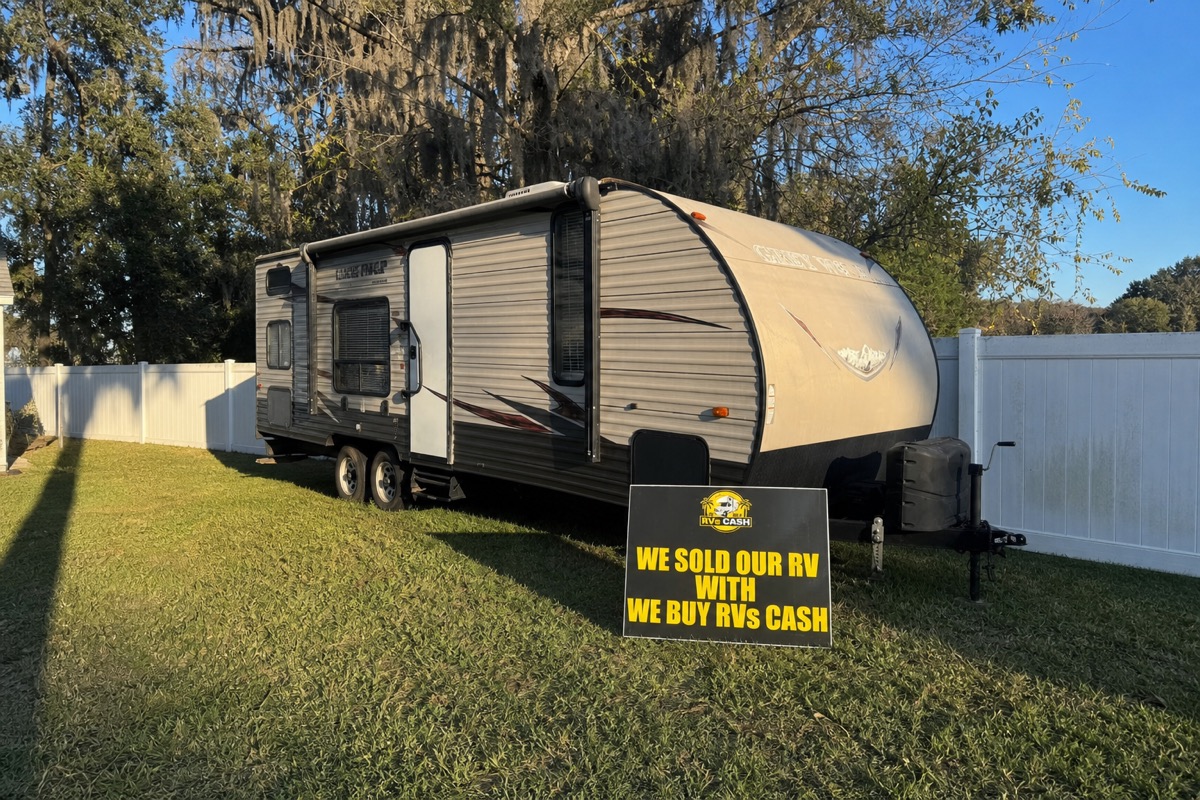
The floor by the door and the canvas at the folds. Those two spots tell us most of what a pop-up or small trailer has been through. Everything else on a unit this size is cosmetic and priced as such.
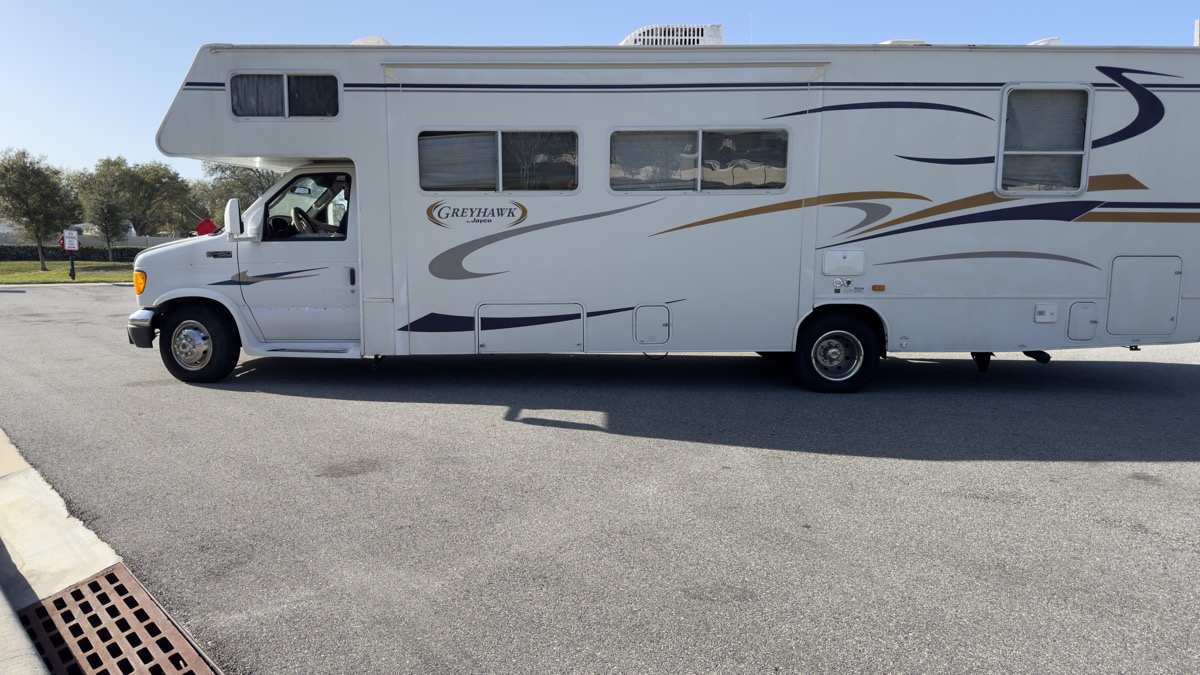
Dealers will not bother with a pop-up and private buyers will haggle you over two hundred dollars. We price small campers properly because it is a real part of what we do, not a favour.
GET MY OFFER →Yes. Pop-ups, truck campers, teardrops and small travel trailers — the whole small end. Most buyers skip them, which is exactly why we don't.
Small campers typically range from under a thousand for a rough pop-up to well into five figures for a newer towable. Run it through the estimator on our homepage.
No, and it's the normal case. We bring the truck and the tow is included in what we've quoted you.
No. Don't spend a dollar or an afternoon on it. A clean camper and a dirty one get the same number from us — we're buying the structure, not the presentation.
Any condition. Torn canvas, soft floors, mildew, hail damage. We buy the ones other buyers pass on, which is most of them.
An old pop-up is typically a four-figure unit at best, and a low one when the lift or the floor has gone. Value tracks condition and brand far more than model year. A clean Coleman or Jayco that still raises, seals and stays dry beats a newer unit with a rotted deck. We give you an actual figure so you can weigh it against listing it yourself.
Yes, and that is how most truck campers reach us. We bring equipment to lift or slide the unit onto a flatbed, so you need no matching truck, no working jacks, and no level surface. Tell us where it sits and whether it rests on jacks, on blocks, or flat on the ground, because that determines what we roll up with.
Yes. Torn canvas, seized zippers and mildew are ordinary on units that have lived in this climate and they disqualify nothing. Those are consumable parts with a known replacement cost, and we account for them without drama. What helps us most is knowing whether the unit was ever closed up wet, since that accelerates damage to the ceiling panel and bunk boards underneath.
Often yes. Some lightweight trailers were never titled at all, and older ones lose paperwork through moves, divorces and estates. Florida has a process for both situations. Tell us what documentation exists, even if it amounts to an old registration or a handwritten bill of sale, and we will say honestly whether the sale can proceed and what comes first.
Small campers fall into a gap nobody wants to service. A dealer will not take a pop-up or a truck camper on trade, because reconditioning eats the entire margin and the lot space earns more under a bigger unit. That pushes owners onto Facebook and Craigslist, where an inexpensive camper attracts the least serious shoppers on the internet. You get lowball messages, no-shows, people asking you to hold it for two weeks, and the occasional stranger who wants to sleep in it before deciding. Then comes the practical trap. Plenty of owners sold the truck years before they dealt with the camper. Now you cannot deliver it, cannot reposition it, and cannot even drag it out of the side yard far enough to take a clean photograph.
Owners of small units usually assume torn canvas is the deal breaker. It almost never is. Replacement tent material is a known cost and it never touches the structure. What quietly ends a camper is the floor. Pop-up floors are thin plywood over a steel frame, and a slow drip at a corner or around the crank shaft turns them spongy long before anything looks wrong from outside. Step firmly near the door and beside the galley before you describe the unit to us. Soft is not fatal. It is information.
On a pop-up the lift is the first thing we ask about. Cables stretch and fray, the crank gearbox strips its teeth, and a roof that binds on one corner has usually been raised out of level for years. Tell us whether it goes up and down under normal effort, whether it locks at full height, and whether any cable has ever been replaced. A seized lift is fixable and we buy them in either state.
Tent material fails in a predictable order down here. Zippers seize first from grit and salt air, then seam tape lets go, then mildew stains set permanently into the panel. Vinyl bunk ends crack along the fold line where they sit compressed for years at a time. Note whether the canvas has holes, whether it still zips shut, and whether it was ever packed away damp. The smell tells us more than a photograph does.
Press down along the doorway, under the sink and at each corner of the box. Softness means water found a seam or a fastener a while back. Then look at the four corner jacks. Bent or seized jacks on a truck camper usually mean it got loaded or unloaded crooked at some point, which twists the whole shell. Surface rust along the frame rails is expected on anything that has lived near the coast.
Light matters enormously in this category. A camper that a half-ton truck or a midsize SUV can handle has a far wider audience than one demanding a serious tow rig, and that shows up directly in the number. Give us the dry weight off the sticker inside the door if it is still legible, plus the closed length. For truck campers we also need the bed size it was built for, short or long.
Text us pictures and the model year. With small units we can often price from photographs alone, because there is less to hide and less to verify. We come back with a figure the same day. Recovery is the part that surprises people. If the camper has not moved in years and the tires are flat or the jacks are frozen, that remains our problem to solve rather than yours. We arrive with a trailer or a truck depending on the unit. You need no hitch, no tow vehicle, and no working brake controller. Title signed, cash in hand, and the side yard is clear by evening.
Send the year and make — that's genuinely enough for a camper. We tow it out and you don't need a truck.
CALL NOW (407) 533-8871On the Tampa Bay side? Call (813) 679-9551 instead.
Check whether the floor gives near the door and whether the canvas is torn. Neither disqualifies it — knowing saves a trip for both of us.