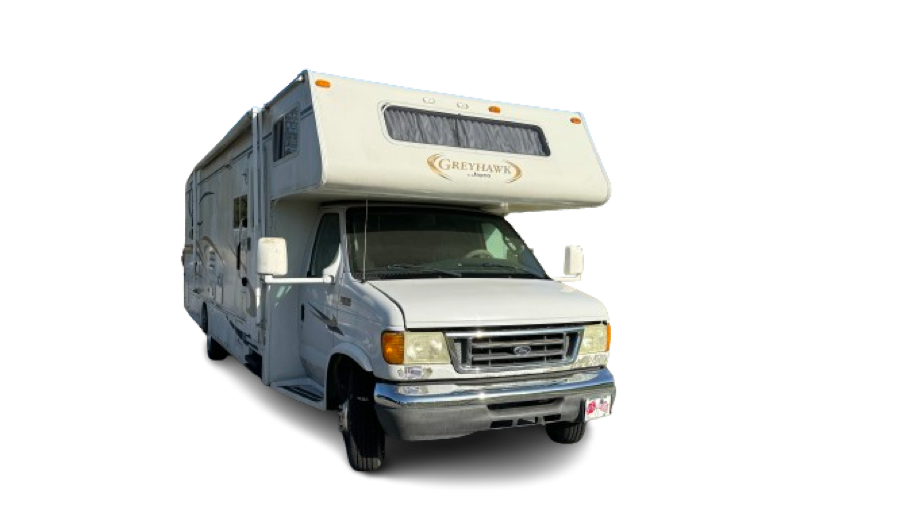
 SOLD
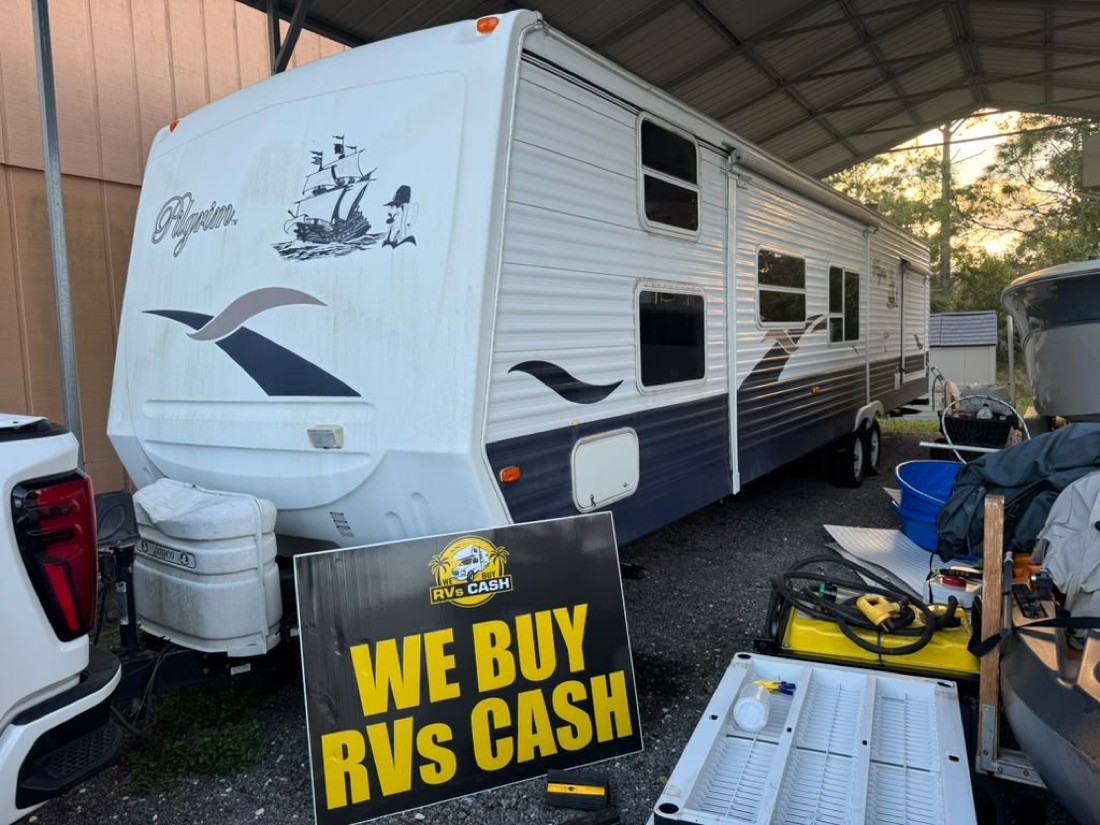
SOLDPILGRIM TRAVEL TRAILER

Junk RV buyers is what you search after three places have already said no. Every other RV buyer in Florida wants the clean ones. We'll take the one with a caved roof, a dead engine and a family of raccoons in the bedroom.
SOLDWater damage, soft floors, delamination, storm and hail damage, blown engines, seized transmissions, mold, rodents, missing titles, units that haven't moved in a decade. If someone has already told you it's worthless, get a second number — the frame, axles, appliances and drivetrain still carry value, and the removal alone is worth something to you.
GET MY OFFER →Not a formula from a book written for a national market. These are the things we actually look at on this type of unit, in Florida.
There's almost always a number. It might be a few hundred dollars, but a few hundred plus free removal beats paying someone to haul it off.
No tow bill, no dump fee, no coordinating a wrecker. It's inside our offer, not on top of it.
Already settled with your insurer? Usually still sellable if you hold the title. Tell us how it was settled and we'll answer straight away.
Missing titles are the most common reason people assume they're stuck. Florida issues duplicates and we walk you through it.
Pick the worst condition on the list and see what comes back. It's usually more than whoever told you it was worthless suggested — and the removal is free either way.
OPEN THE ESTIMATOR →
Whether the frame is straight and whether the axles turn. Those two answers decide whether it comes out on wheels or on a flatbed, which is the single biggest cost difference in a salvage purchase.
Rodents, mould, a caved roof, no title. Everybody else says no and then quotes you for disposal. We say yes and the removal comes out of our side, not yours.
GET MY OFFER →Yes. Water damage, storm damage, blown engines, mold, rodent infestations, units that haven't started in ten years. It's a meaningful part of what we buy.
We do, and it's one of the most common questions we get. Florida issues duplicate titles and we walk you through requesting one — a missing title slows the sale, it rarely stops it. Call before you assume you're stuck with it.
Yes. We pay cash for junk and non-running RVs across the state and we cover the removal ourselves. Even a unit somebody told you was worthless usually clears a real number.
Almost never. The frame, axles, appliances and drivetrain hold value even when the interior is gone. And free removal has value to you on its own.
No. We don't charge for removal, ever. If the number we quote is small, it's still a number you receive — not a bill you pay.
Often yes, depending on the situation. Call before you assume you can't — this is the single most common reason people give up on an RV that still had value.
Yes, mold and water damage make up the majority of what we purchase. We are not reselling these as camping units, so an interior nobody would sleep in does not change our interest. Please do not attempt cleanup or demolition before we look. Torn-out walls make a unit harder to evaluate and can lower what we pay rather than raise it.
Often yes. Florida provides routes for units with lost, unsigned or missing titles, including duplicate applications and abandoned property procedures. What matters is establishing your right to sell it. Tell us how the unit came to be yours, and we will identify which path applies before anyone schedules anything. There is no charge for that conversation.
Selling beats scrapping almost every time, because scrap value counts only the metal while a buyer counts appliances, axles, frame and drivetrain as well. Scrap yards also charge for transport and frequently refuse units full of wood, foam and fiberglass. We purchase the whole thing and cover removal, so nothing comes out of your pocket at any stage.
Yes, we pull units out of storage facilities, RV parks, mobile home lots, rental houses and raw land. We need permission from whoever controls access plus a gate contact if one exists. If the facility has placed a lien for unpaid rent, that has to be resolved first, and we can walk you through how those situations typically get settled.
Most people who call an RV junk were told so by someone with no reason to buy it. A repair shop quotes four figures to chase a single leak. A consignment lot declines to take it. A neighbor announces it is only good for scrap. None of that is a valuation. It is a decline. What actually sits in that unit is a steel frame, two axles with hubs and brakes, a converter, a water heater, a furnace, a refrigerator, an air conditioner, copper wire, aluminum skin and frequently a drivetrain. Every one of those has a buyer somewhere. Meanwhile the thing generates bills: lot rent, a code enforcement letter, an association notice, or a landlord who wants the property cleared before the next tenant signs.
Storm damage and rodent damage get lumped together and they are nothing alike. A limb through the roof is a single mappable event, and everything outside the impact zone is usually intact and salvageable. Rodents are systemic. They nest inside ducting, chew the twelve-volt harness in three places you will never find, and leave contamination through the entire wall cavity. Owners disclose the tree and forget the mice. We would rather hear about the mice. Either way the unit still sells. The difference is which parts survive.
Before deciding it is empty, inventory what physically remains. Refrigerator, furnace, water heater, roof air, converter, inverter, awning, generator, plus engine and transmission if it has them. Stripped shells are worth dramatically less than complete units, even when absolutely nothing functions. If a previous buyer already pulled appliances or cut out the copper, say so upfront, because a gutted carcass is a different transaction with a different number.
Underneath the floor is the part water cannot destroy. We want to know whether the frame is straight, whether both axles remain under it, and whether the wheels still turn. A unit that rolls costs far less to recover than one resting on the ground on collapsed suspension, and that gap shows up in what we can pay. Surface rust is expected. A rail cracked at a spring hanger is a different matter.
There is a real difference between a stained ceiling and a floor you can put a foot through. Tell us whether the roof still sheds water, whether daylight comes through anywhere, whether the walls have separated at the corners, and whether the thing has stood open to weather for a season or for many years. Mold disqualifies nothing. We take contaminated units regularly and dispose of what cannot be salvaged.
Missing paperwork is the single most common reason a derelict unit sits untouched for years, and it is usually solvable. Tell us whether you hold the title, whether it is in your name, whether an old lien was ever recorded, or whether the thing simply came with a property you purchased. Florida has established paths for abandoned and untitled units. We deal with this constantly and will tell you straight.
Send photographs, including the outside from all four corners and whatever the inside currently looks like. Do not clean it up first. We want the real condition, because a surprise on pickup day is the thing that blows up a deal. We come back with a number, and if the unit truly sits below salvage value we say so plainly and quote free removal instead. Either way, making it disappear costs you nothing. On the day, we bring equipment sized for something that will not roll, sweep up whatever falls off in transit, and leave the spot clean. Payment is cash at the unit, before anything moves.
Be blunt about what's wrong with it. Water, mold, no engine, no title — none of it ends the conversation, and removal is on us.
CALL NOW (407) 533-8871On the Tampa Bay side? Call (813) 679-9551 instead.
Find out whether you actually hold the title, and check whether a truck can physically reach it. Everything else about its condition, we've already seen worse.